Physicist
Alan Whitfield
He discovers the loophole that makes the impossible practical — and unleashes consequences he never intended.
What if gravity had a loophole? Physicist Alan Whitfield finds one. What follows is a new world where flight becomes labor, freedom becomes something you can rent, and the people who control the ground learn to control the sky.

gravitys-price-cover.jpg
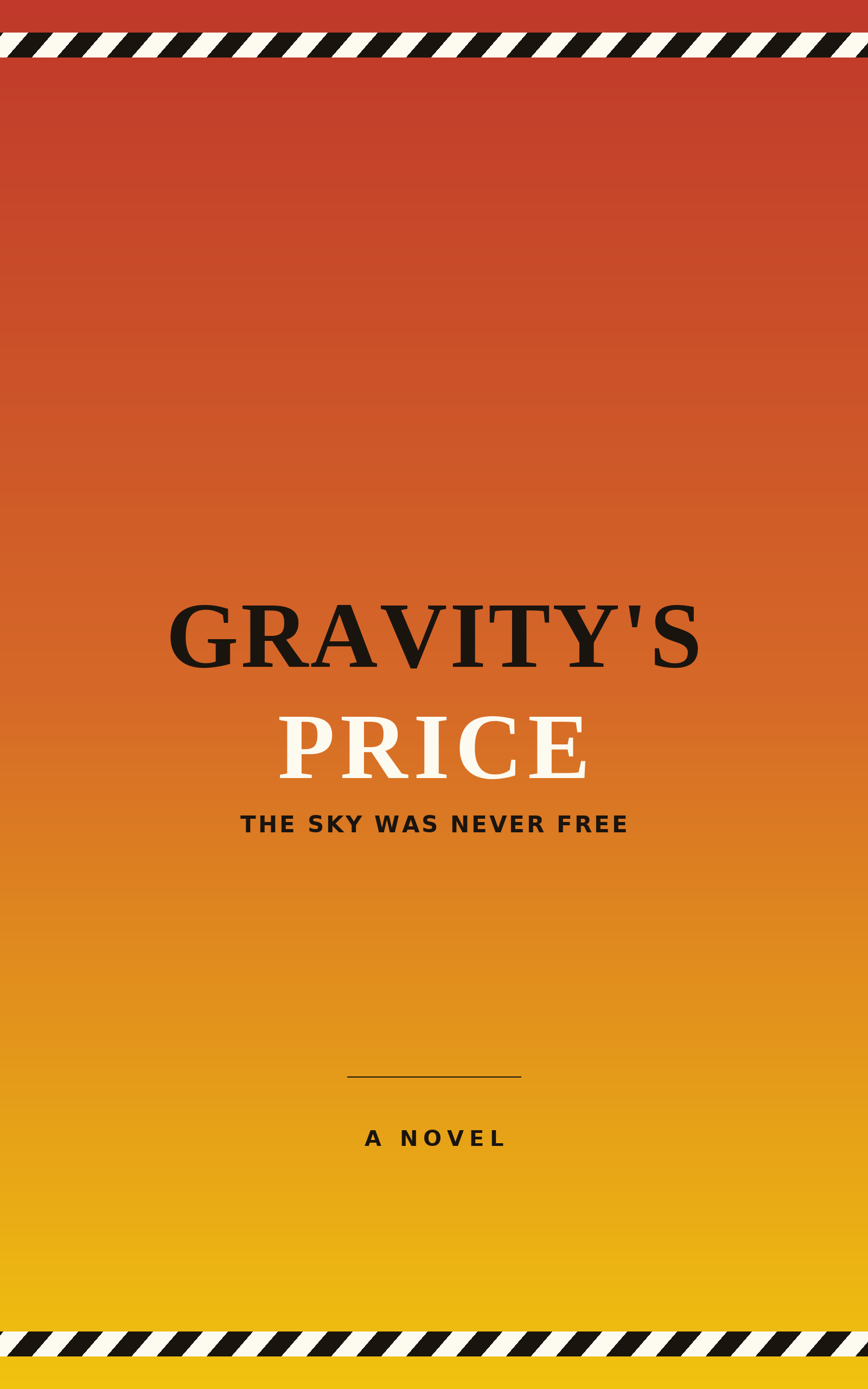
Alan Whitfield spends six years alone in a basement lab trying to prove that gravity has a loophole. When he succeeds, he doesn't simply make history. He threatens every industry built on the assumption that human bodies stay on the ground.
Within months, flight is no longer a miracle. It's a job.
A new labor class emerges: flying laborers who carry cargo and people through city skies, their ability to fly tethered to a recalibration schedule their employer controls.
The wealthy buy their freedom outright. The poor rent theirs, one shift at a time — one missed appointment away from falling.
Amy Okafor sees the danger before almost anyone else. A community organizer with no reason to trust the men selling this future, she builds a labor movement — a fight for social justice — from a folding chair in a laundromat back room into a political force nobody in power can afford to ignore.
Not everyone wants the sky opened. Oil magnate Daniel Reyes watches a technology that could make his industry obsolete overnight, and answers with a patient, deniable corporate campaign to slow it down — turning Gravity's Price into a political thriller as much as a technothriller, fought in boardrooms and hearing rooms as much as in the sky.
He discovers the loophole that makes the impossible practical — and unleashes consequences he never intended.
She understands that a technological revolution can still reproduce the oldest inequalities.
He wages a quiet corporate and political war to protect an empire this discovery makes obsolete.

A full novel priced like a debut release: accessible while Anil Chugh builds a readership. No artificial discounts, countdowns, or scarcity — just three editions at their regular list prices.
Carry the full novel with you, wherever you go.
Buy on Amazon →A physical edition for readers who like their science fiction on the page.
Buy on Amazon →A more substantial physical edition for your bookshelf or collection.
Buy on Amazon →A gravity loophole becomes a technology with everyday consequences.
The sky becomes infrastructure: useful, crowded, commercial and contested.
The central question isn't whether technology works. It's who gets to benefit.
If you like hard science fiction with a socioeconomic edge, Gravity's Price explores the systems that appear when an extraordinary discovery meets ordinary human incentives.
Get Gravity's Price →